Voices in Montessori Podcast
Voices in Montessori podcast shares interviews with seasoned Montessori educators and leaders, as well as learning specialists, and other experts to inspire and support you. Our podcast is a resource for Montessori educators and leaders packed with actionable ideas to elevate and support your practice. Hear from Montessori elders about real-world classroom tools and school management strategies. How do I offer positive discipline in my Montessori classroom? How do I get the support that I need as a first year Montessori teacher? How do I change the culture of my Montessori school community? We will explore these questions and more on the Voices in Montessori podcast. Topics include supporting learning differences in the Montessori classroom, positive discipline strategies, the neuroscience of learning, creating school cultures of belonging, and Montessori for elders and dementia. Tune in and subscribe to deepen your Montessori practice and join a revolutionary community of Montessori educators and leaders who are shaping the future of education. View the show notes at https://greenspringcenter.org/podcast/ Join the conversation on our Facebook community at https://www.facebook.com/greenspringcenter Learn more when you follow us on Instagram at https://www.instagram.com/greenspringcenter/





Episodes
Mar 5, 2024
Mar 5, 2024
58 min
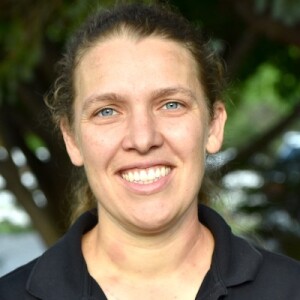
Sylvia Glassco joins the Voices in Montessori podcast, hosted by Tamara Sheesley Balis, to share how the Adolescent Community prepares students for high school and beyond. As they straddle the line between childhood and adulthood, their time in the Adolescent Community is a time of skill building. Students need to be comfortable with drafting and revision as a writing process; entering into a math problem and searching for a way to represent it; and using evidence to support an argument. They must build executive functioning and self-regulation skills. They must discover what kind of learners they are and build the self-advocacy skills they need in the adult world. They must be empowered to make meaningful contributions.
Sylvia discusses how all this skill building is interwoven through a rigorous academic curriculum, how students engage in formative and summative assessment (without traditional letter grades), and how Microeconomy work provides Adolescents the opportunities to build many of these skills while working as a team, experiencing failure, and overcoming challenges.
Feb 21, 2024
Feb 21, 2024
57 min
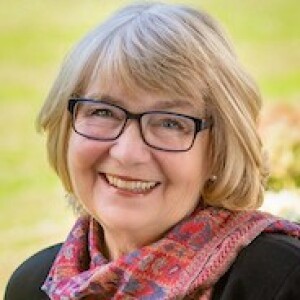
Marcia Perez joins the Voices in Montessori podcast, hosted by Tamara Sheesley Balis, to share her expertise with Montessori music curriculum and materials. Long before the technology existed to prove it, Montessori realized that music was key to children's neurological development, and language development in particular. The Bells, therefore, can not be thought of as an "extra." Instead, they are an essential part of the Sensorial curriculum in the Primary classroom.
Marcia briefly shares the history of the development of the Bells and Tone Bars. She then encourages Guides who are intimidated by the music work to think of it simply as pitch and rhythm. They can be studied individually, or together in the form of song. Marcia dives into how to incorporate rhythm, pitch, singing, movement, and music appreciation into a rich experience woven throughout the curriculum.
Marcia does a deep dive into how the Bells should be set up, introduced to the children, and used by the Guide when singing. She talks about how to use the White Boards (the singing charts), which introduce pitch and pattern, and the Rhythm Patterns (clapping charts), which work on rhythm. These materials become centerpieces for the child training their ear in music, which in turn, improves the child's ear for the development of language. Marcia says, "Music IS language!"
Feb 13, 2024
Feb 13, 2024
44 min
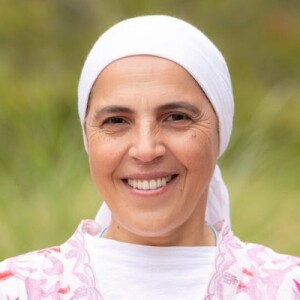
Sue Saad joins the Voices in Montessori podcast, hosted by Tamara Sheesley Balis, to talk about providing early art experiences for toddlers. Sue describes how to lay the groundwork for toddlers to use art experiences in their self-construction. Sue explains that toddlers are in the process of gaining the true creative spirit required for producing innovative art, confident independent thinking, and problem-solving. They are truly absorbed in the process, not the product. Sue shares the art materials and experiences that are appropriate for toddlers and how to refrain from stifling their creativity and learning.

Feb 6, 2024
Feb 6, 2024
1hr 3 min
Junnifa Uzodike and Simone Davies join the Voices in Montessori podcast, hosted by Tamara Sheesley Balis, to talk about how we can educate families about the Planes of Development to facilitate closer partnership. As Montessorians, we know how vital our understanding of the Planes of Development is in shaping how we approach and respond to children, yet families don't often have this same understanding. The Planes of Development can serve as a "guidebook" for families, helping them to understand the characteristics and needs of their children, manage their expectations, and how better to respond to their children. Junnifa explains that when we give our families the gift of this knowledge, we empower them to be partners and collaborators in supporting children to their full potential.
Junnifa and Simone share the most important characteristics, tips, and tools they share with families about children in each Plane of Development.
Jan 23, 2024
Jan 23, 2024
1hr 5 min
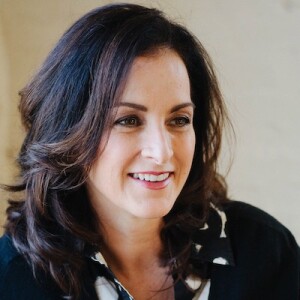
Jen Cort joins the podcast to discuss how to approach diversity, equity, and inclusion conversations with our students. Jen begins by helping to reframe (and detoxify) the terms bias and privilege. She also offers strategies specific for having conversations with children at different ages and how these can be woven into the fabric of our classrooms (rather than designating certain blocks of time to discuss DEI). She also offers some themes we can introduce to our students (i.e., same and different, equity detectives, etc.) and suggests scripts for how to respond to certain questions that may make us feel uncomfortable. Jen's book, Help Us Begin: Strategies and mindsets for meaningful conversations with kids, especially when you are challenged by the topic, is an excellent resource for more tips.

Jan 18, 2024
Jan 18, 2024
48 min
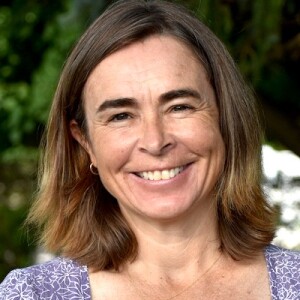
Andrew Faulstich joins the Voices in Montessori podcast to discuss resisting the push toward standardization in our current educational system. Andrew discusses how this trend emerged in the 1980’s and continues today. He contends that the question, “What works?” is not the right question to be asking. Andrew argues that standardized education is aimed at an imaginary child “in the middle,” which means it isn’t actually meeting the needs of anyone. And instead of asking, “Are students proficient at x, y, and z skills?”, he wonders why we aren’t instead asking, “What do we want for our students? What kind of society are we creating?”So what is the alternative? Andrew makes a case for an alternative model (such as Montessori) that honors what students can do with real-world work. Andrew describes humanistic methods of assessment, such as student self-assessments and goal setting, student-led conferences, and portfolio-based evaluations. The focus of these methods, rather than a numeric score, is actually preparing students for life. In light of the current trends of anxiety and depression in teens, is it not our moral responsibility to better serve the needs of our students? Join us for this fascinating discussion!
Jan 9, 2024
Jan 9, 2024
52 min
Shelley Cruse joins the Voices in Montessori podcast to discuss supporting emergent readers in the Lower Elementary classroom. Rarely does every child entering Lower Elementary come in as a fluent reader. Shelley discusses normalizing that fact that learning to read begins in the toddler and children's house classrooms and it continues in Lower El.
How do you know which students need additional support? Which Montessori materials are appropriate for the Elementary child (and which aren't)? What other activities can you create for emergent readers in the second plane of development? How do you monitor their progress? How do you discuss their progress with parents and guide parents how to help (or not) at home? Shelley shares her expertise as Montessori Guide and reading specialist.
Dec 12, 2023
Dec 12, 2023
58 min
Dr. Nicole Evans and Carly Riley join the podcast to share five goals that can support you in developing the stamina and skills for effective anti-racist learning, awareness, and action in your teaching practice and beyond!
Nicole and Carly see anti-racist education as the lever for social transformation. Through their organization, Embracing Equity, they work alongside educators and leaders to co-create authentically equitable organizations through:
Individual learning so people themselves raise their knowledge, awareness, and action when it comes to identifying, analyzing and knowing what to do in the face of oppression.
Interpersonal action because anti-racism work is community-building work, and we have to do it together.
Institutional transformation in order to create new systems and structures that center equity.
In this episode, Nicole and Carly focus on individual learning - specifically, five anti-racist learning goals you can do RIGHT NOW to build a sustained anti-racism practice in your classroom.
Dec 5, 2023
Dec 5, 2023
1hr 6 min
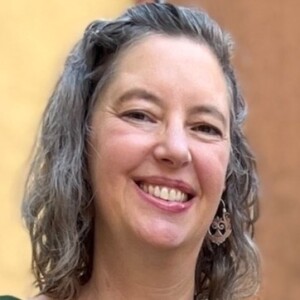
Jennifer Shields joins us to talk about creating a culture of writing in the Primary classroom.
Jennifer explains how Montessori Guides first build up children's ability to express themselves orally by talking to them, singing, reciting poetry, and maybe most importantly, by listening to them. In a Montessori setting, children can explode into writing when their hands and minds are indirectly and directly prepared through practical life, sensorial, and through spoken language. The key lessons in sound games, sandpaper letters, and movable alphabet get a child on the road to writing.
Jennifer then details all the ways Guides can encourage writing through a variety of modes from modelling, creating important opportunities to write (e.g. thank you notes, invitations), using a class journal, and more. She encourages us to use our intimate knowledge of each child to create experiences of writing that are personalized and joyful!

Nov 21, 2023
Nov 21, 2023
1hr 3 min
Linda Englehart joins the podcast to talk about supporting children's connection to nature. She talks about how the child's experience of nature has changed over time. Today’s children are “containerized” (examples: playpens, bouncy seats, car seats, strollers, spending more time indoors in general) and cut off from the natural contact that generations past had. Yet physicians, educators, psychologists, sociologists, and others have all discovered many benefits in nature immersion, as well as detriments to health and well-being from nature-deficit disorder.
Linda reminds us that humankind’s first prepared environment was the natural world. Montessori materials--in our second prepared environment, the classroom--were designed with the assumption that children had hands-on experiences in the first prepared environment. So what can educators do to help mitigate this deficit that many children are experiencing?
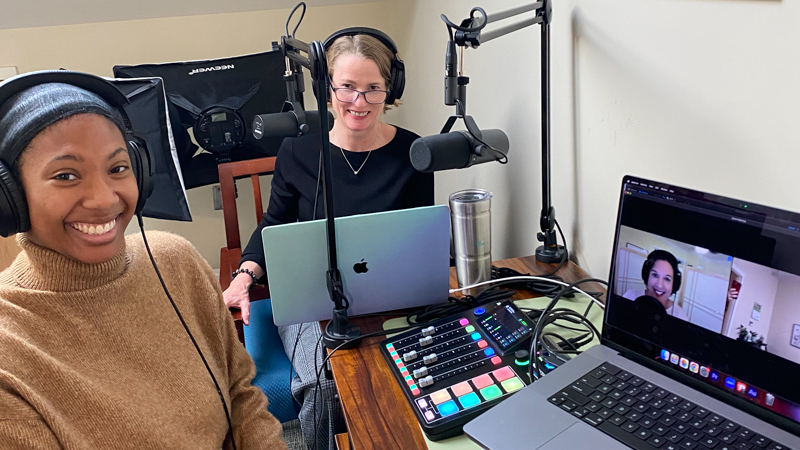
Linda gives practical suggestions for things to do in the classroom and ways to partner with parents to support children in developing biophilia, a love of nature. Our host, Tamara Sheesley Balis, also shares ways we can support our staff in developing their own connection to nature.
About Greenspring Center for Lifelong Learning
The mission of the Greenspring Center for Lifelong Learning is elevating and supporting the emerging generation of Montessori educators, leaders, and schools.
View the show notes at https://greenspringcenter.org/podcast/
Join the conversation on our Facebook community at https://www.facebook.com/greenspringcenter
Learn more when you follow us on Instagram at https://www.instagram.com/greenspringcenter/